
BANK EROSION: WHAT TO LOOK FOR, WHEN TO ACT, AND HOW TO AVOID THE EXPENSIVE FIX
Written By Brendan Nielsen
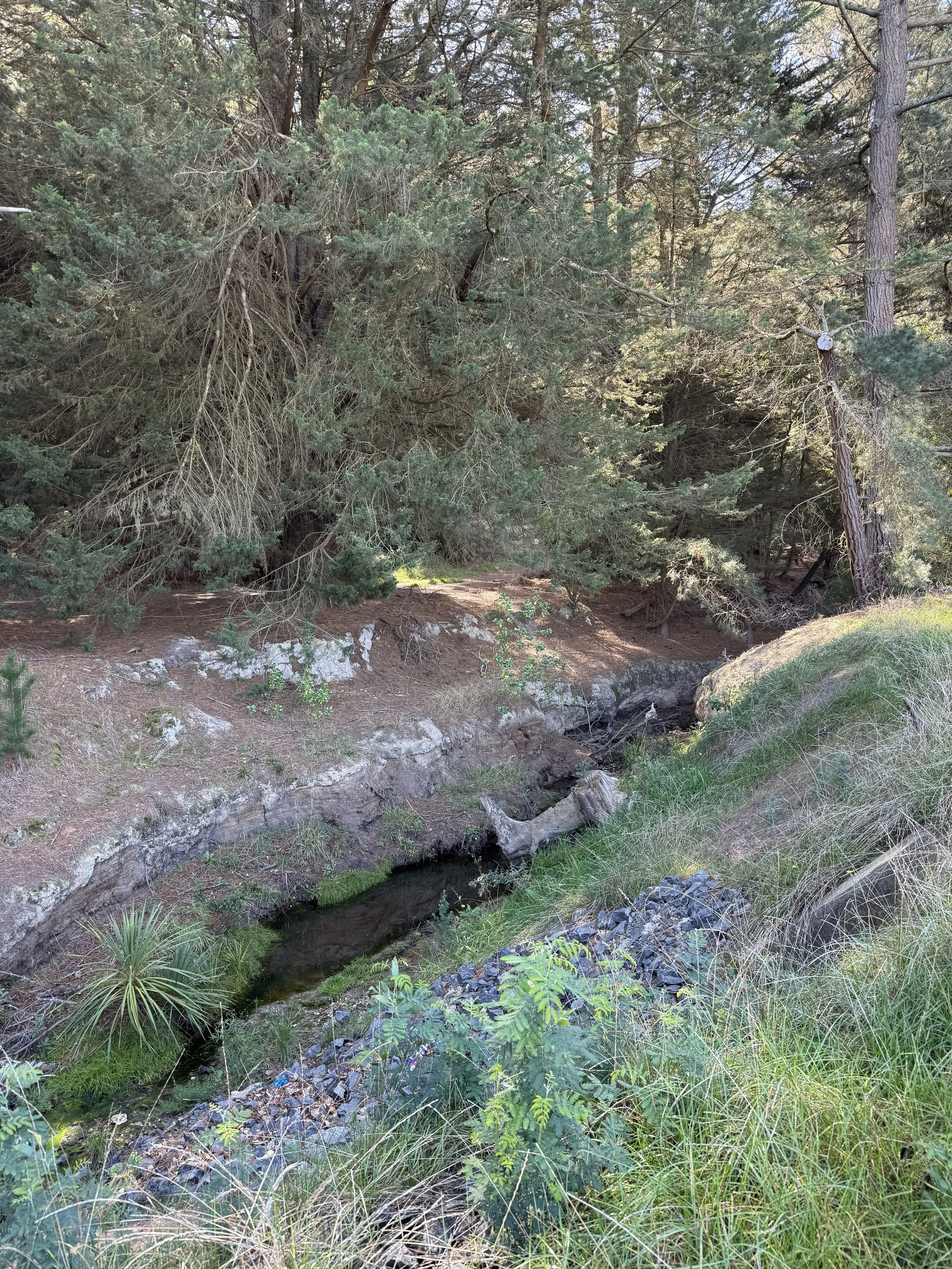
This photo tells the whole story.
One bank protected with rock armouring — stable, holding, doing its job. The other bank actively eroding — exposed soil, undercutting, root systems left hanging, and material washing downstream with every storm.
Same creek. Same flows. Two very different outcomes.
The difference? One side received early intervention. The other didn't. And the longer it's left, the more expensive the fix becomes.
Why Bank Erosion Matters More Than People Think
Creek and waterway bank erosion is one of the most common infrastructure risks across regional Australia. It's also one of the most underestimated.
It rarely makes the news until something fails — a road shoulder drops away, a service crossing is exposed, a property boundary disappears overnight after a major storm event.
But the warning signs are almost always visible well before that point. You just have to look.
Undercutting at the toe of the bank is the first sign of trouble. Water scours the base of the bank, removing support. The material above eventually collapses under its own weight.
Exposed tree roots tell you the soil that once surrounded them has already been lost. If roots are hanging over the bank face, erosion has been active for some time.
Tension cracks along the top of the bank indicate the next section of bank is preparing to slump. This is a clear signal that failure is imminent without intervention.
Sediment deposition downstream means the eroded material is moving through the system, impacting downstream infrastructure, reducing culvert capacity, and degrading water quality.
None of these observations require sophisticated equipment. They require someone who knows what to look for, standing on the bank and using common sense.
The Common-Sense Case for Acting Early
Emergency erosion repair after a major storm event is expensive. Mobilising equipment at short notice, working in wet and unstable conditions, and repairing damage that has spread well beyond the original problem area — it all adds up fast.
Compare that to planned, early-stage intervention.
A practical site assessment identifies the problem. A fit-for-purpose design addresses it proportionately. Construction happens in controlled conditions, on schedule, and on budget.
The numbers consistently favour prevention. In our experience, planned erosion stabilisation typically costs a fraction of emergency repair for the same length of bank. The earlier you act, the smaller the problem and the simpler the solution.
What Works: Practical Stabilisation Methods
There's no single answer to bank erosion. The right solution depends on the site — flow velocities, bank height, soil type, access, environmental sensitivity, and budget.
But some methods have proven themselves time and again.
Rock rip-rap remains one of the most reliable and cost-effective bank protection techniques available. Properly sized and placed, it absorbs flow energy and prevents further scour at the toe. It's durable, low-maintenance, and well understood. You can see it working in this photo.
Revegetation complements structural protection. Native grasses, sedges, and riparian plantings bind soil, slow surface runoff, and improve habitat. On its own, revegetation isn't always enough for high-energy waterways. But combined with rock protection, it delivers long-term stability.
Upstream flow management addresses the cause, not just the symptom. If increased flows from upstream development or drainage changes are driving the erosion, stabilising the bank alone won't solve the problem permanently. Understanding the catchment is part of the solution.
Bioengineering techniques — using living plant material as structural elements — are increasingly used where environmental sensitivity is high. Log crib walls, brush mattresses, and live stake plantings can stabilise banks while restoring habitat, provided conditions suit their use.
At JCE, we don't default to the most complex or expensive option. We recommend what's fit-for-purpose for the site, the risk, and the budget. That's practical engineering.
What To Do If You've Got Erosion On Your Radar
Whether you're a council asset manager, a property owner, or a project manager dealing with waterway interfaces — here's a practical checklist:
Inspect your waterway assets regularly. Annual visual inspections of high-risk banks catch problems early. Photograph the same locations each time to track changes.
Look for the warning signs. Undercutting, exposed roots, tension cracks, and downstream sediment are all red flags. You don't need specialised equipment to spot them.
Don't wait for a storm to force your hand. If you can see active erosion, it's progressing. Planned intervention now will cost less than emergency repair later.
Get proportionate advice. Not every eroding bank needs a full geotechnical investigation. A practical site assessment by an experienced engineer is often enough to set the right course of action.
Think about the catchment, not just the bank. If flows have increased due to upstream changes, bank stabilisation alone may not be a permanent fix. Consider the whole system.
How JCE Can Help
We work with councils, developers, and asset owners across Australia to assess, design, and manage waterway and erosion stabilisation projects. Our approach is hands-on, practical, and driven by common sense.
We walk the site. We identify the real risks. And we recommend solutions that are fit-for-purpose — not over-engineered.
If you've got bank erosion, waterway instability, or drainage concerns, a conversation now could save significant cost and disruption later.
👉 Contact JC Engineers to discuss your site.