
AGEING CULVERTS AND TIGHT BUDGETS: A COMMON-SENSE APPROACH TO DRAINAGE PRIORITIES
Written By Brendan Nielsen
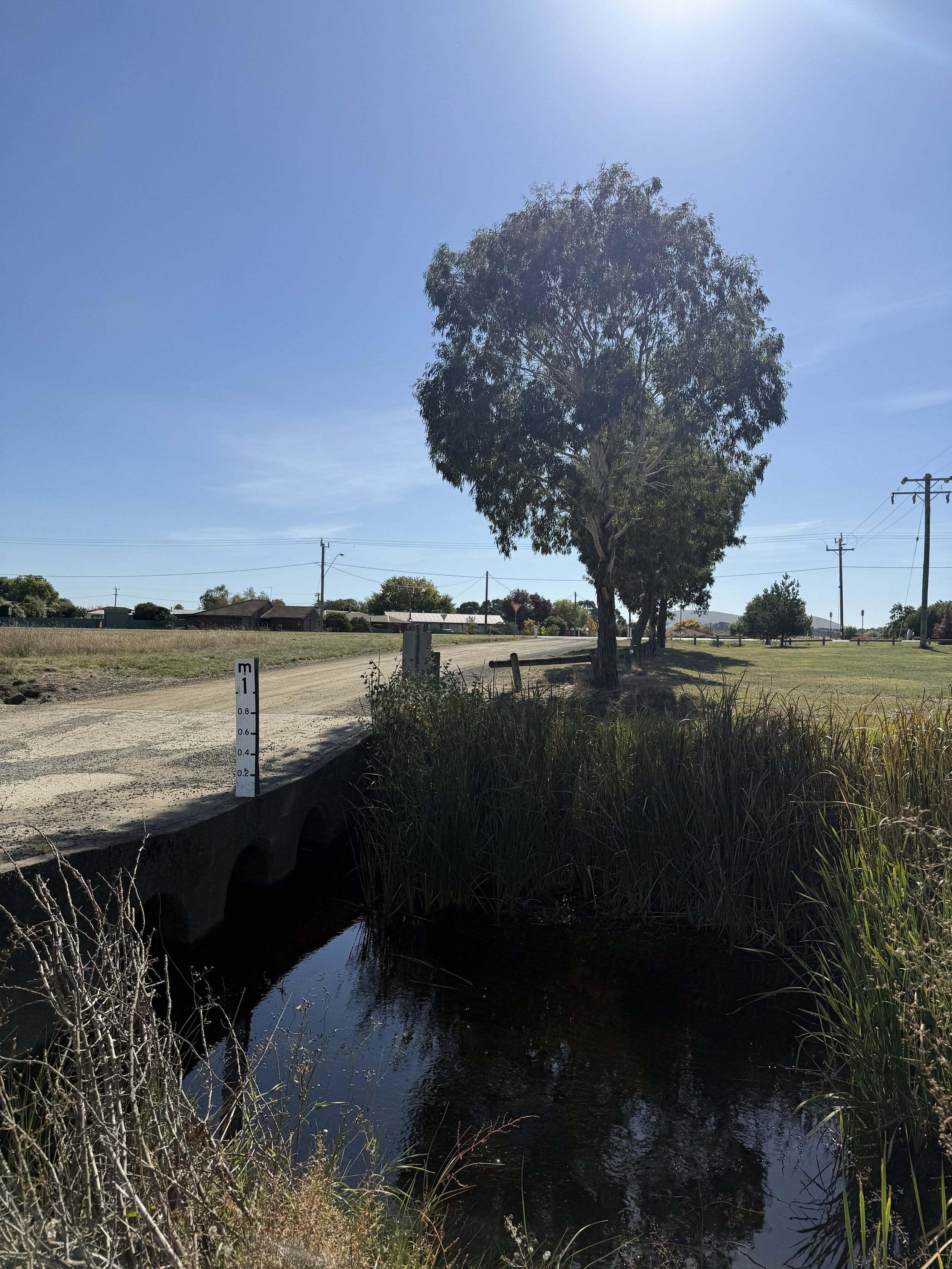
If there's a flood depth marker bolted to it, the structure has a story to tell.
This culvert crossing in regional Victoria — photographed during a recent JCE site inspection — is one of thousands like it across Australia. Built decades ago. Designed for conditions that no longer exist. Still in service. Still expected to perform.
The question isn't whether these structures need attention. It's which ones need it first — and how to spend limited budgets where they'll make the most difference.
What a Flood Depth Marker Really Tells You
Flood depth indicators are a practical safety measure. They warn drivers when water is too deep to cross safely. That's their primary purpose, and it's a good one.
But from an engineering perspective, they also tell you something important: overtopping is a known and expected event at this location.
That raises immediate questions. How often does it overtop? Has the frequency increased? Has upstream development changed the catchment since the structure was built? Is the culvert still hydraulically adequate for current design standards?
These aren't academic questions. They're the practical starting points for any drainage asset assessment.
The Real Challenge: Prioritisation
Most councils we work with aren't short on infrastructure that needs upgrading. They're short on budget to do it all at once.
That's where practical engineering judgement becomes essential.
Not every ageing culvert needs immediate replacement. Some are performing adequately despite their age. Others are one major storm event away from failure. The difference between the two isn't always obvious from a desktop review — which is why on-site assessment matters.
At JCE, we help councils prioritise by asking straightforward questions:
Is it still doing its job? A culvert that passes design flows without structural distress may have years of service life remaining, even if it doesn't meet current standards. Understanding this avoids spending money where it isn't needed yet.
What's actually changed? Upstream development, land clearing, or altered drainage paths can dramatically increase flows to an existing structure. If the catchment has changed, the culvert's capacity needs reassessing — even if the structure itself is in good condition.
What happens if it fails? Risk-based thinking is common sense. A culvert on a quiet rural road carries different consequences to one on a school bus route or an emergency access road. Prioritise accordingly.
What's the fit-for-purpose fix? Not every solution needs to be a full replacement. Sometimes a capacity upgrade, headwall repair, or improved scour protection extends the asset's life at a fraction of the cost.
Over-Engineering Wastes Money. Under-Engineering Creates Risk.
The sweet spot is practical, fit-for-purpose advice. That means being honest about what's needed — and equally honest about what isn't.
At JCE, we've built our reputation on giving councils and asset owners straight answers. If a structure can be maintained and monitored rather than replaced, we'll say so. If it needs urgent intervention, we'll say that too. And we'll explain why in plain language, not buried in technical jargon.
Engineering consulting should make decisions easier, not harder. That's the standard we hold ourselves to.
What To Do If You're Managing Drainage Assets
If you're responsible for drainage infrastructure — whether as a council engineer, asset manager, or project manager — here are practical steps worth considering:
Prioritise site inspections for structures with known overtopping history. Flood depth markers and historical records are your starting point.
Compare current catchment conditions to original design assumptions. Development, land use changes, and climate variability all affect flows.
Assess structural condition alongside hydraulic capacity. A structure can be hydraulically adequate but structurally compromised, or vice versa.
Seek engineering advice that's proportionate to the risk. Not every assessment needs a full hydraulic model. Sometimes a practical site review and experienced judgement is enough to set priorities.
How JCE Can Help
We work with councils and asset owners across Australia to assess, prioritise, and plan upgrades for ageing drainage infrastructure. Our approach is built on common-sense engineering, practical site assessment, and honest advice.
No unnecessary complexity. No gold-plated solutions. Just fit-for-purpose outcomes that respect tight budgets and real-world constraints.
👉 Contact JC Engineers to discuss your drainage or asset management needs.